Negroni
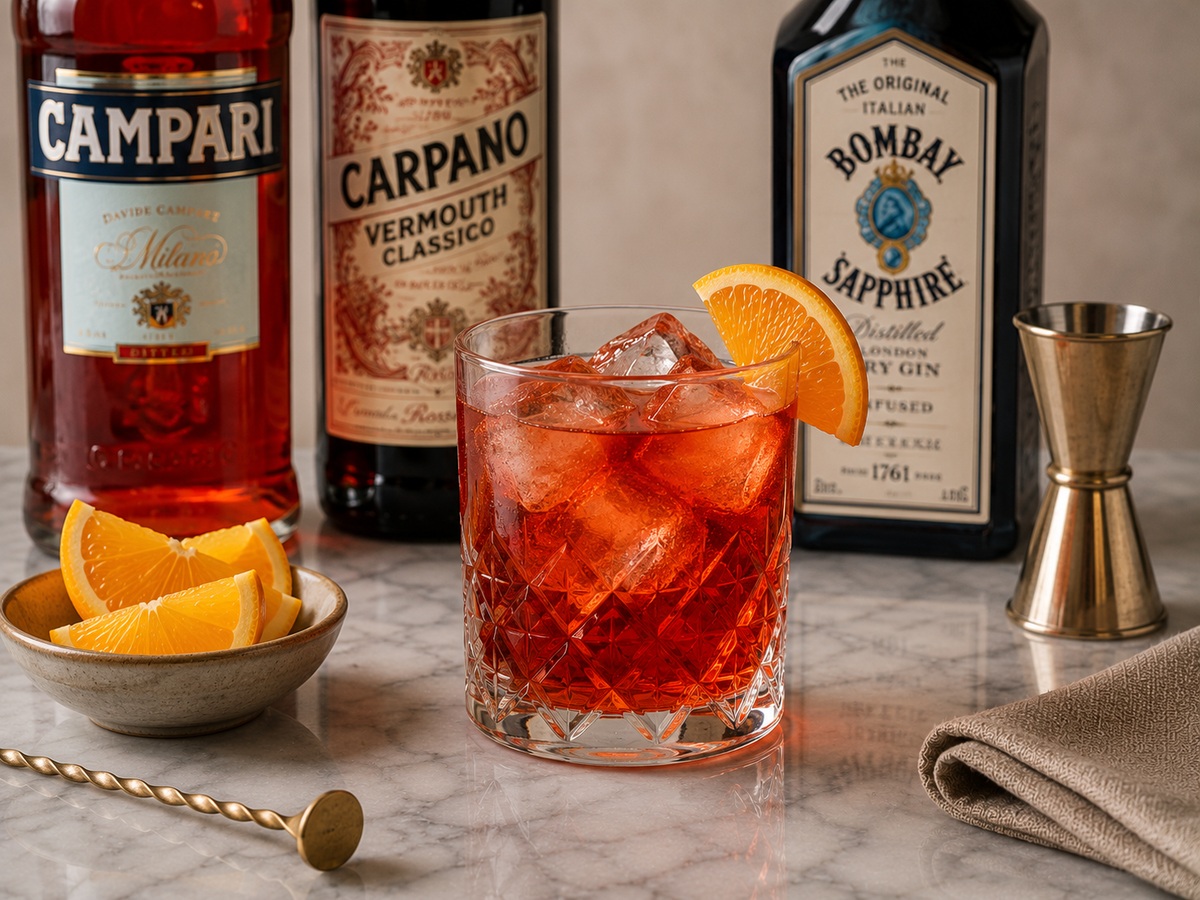
A classic Italian aperitif made with equal parts gin, Campari and sweet vermouth. Known for its bold, bittersweet flavor, the Negroni combines herbal complexity, citrus notes and a pleasantly bitter finish.
Drink details
Glass
Old Fashioned Glass
Ice
Cubed
Method
Stirred
Strength
Strong
Servings
1
Recipe
Ingredients
Gin
30 ml
Campari
30 ml
Sweet Vermouth
30 ml
Garnish
Orange Slice
Half-slice
1 piece
Rating
Rate this drink
Method
Preparation
- 1
Add 30 ml of gin, 30 ml of Campari and 30 ml of sweet vermouth directly to a chilled Old Fashioned glass filled with ice. Stir gently to combine and chill the ingredients.
- 2
Garnish with an orange half-slice and serve immediately.
About the Negroni
The Negroni is a classic Italian aperitif cocktail made with equal parts gin, Campari, and sweet vermouth. Known for its distinctive red colour and bold bittersweet flavour, it is one of the most recognisable cocktails in the world. Its simple three-ingredient recipe combines the botanical character of gin, the bitter citrus notes of Campari, and the rich herbal sweetness of vermouth.
The cocktail is widely associated with Florence, Italy, and is traditionally believed to have originated around 1919, when Count Camillo Negroni reportedly requested a stronger variation of the Americano by replacing soda water with gin. Although the precise historical details remain debated, the Negroni has since become an enduring symbol of Italian aperitivo culture.
Traditionally prepared directly in an Old Fashioned glass filled with ice and garnished with an orange slice, the Negroni is gently stirred rather than shaken to maintain its smooth texture and clarity. Its equal-parts formula makes it easy to prepare, while its complex balance of bitterness, sweetness, and botanical flavours gives it a distinctive character.
The Negroni has also inspired several popular variations, including the Negroni Sbagliato, which replaces gin with Prosecco for a lighter, sparkling alternative. Unlike its sparkling counterpart, the classic Negroni is stronger and more spirit-forward, making it particularly appealing to those who enjoy bold, aromatic cocktails.
What does a Negroni taste like?
The Negroni has a bold, complex, and distinctly bittersweet flavour, with a rich balance of herbal, citrus, and botanical notes. Campari provides the cocktail's characteristic bitterness, with prominent bitter orange and aromatic herbal flavours, while sweet vermouth adds richness, gentle sweetness, and warming spice. Gin contributes juniper and other botanicals, giving the drink additional depth and complexity.
The first sip delivers an assertive bitterness balanced by the sweetness of the vermouth, followed by layers of citrus, herbs, and subtle spice. Its texture is smooth and full-bodied, with a warming alcoholic character and a long, lingering bittersweet finish. As the ice gradually melts, the flavours soften slightly, making the cocktail more approachable without losing its distinctive character.
Tips for making a Negroni
Use a good-quality gin
Choose a London Dry Gin with a pronounced juniper character and balanced botanicals. A classic London Dry style works particularly well because its crisp, herbal profile stands up to the bitterness of Campari and the sweetness of vermouth. Avoid overly delicate gins, as their flavours may be overshadowed by the other ingredients.
Choose the right sweet vermouth
Use a good-quality sweet red vermouth (Vermouth Rosso) with balanced sweetness, herbal complexity, and subtle spice. Different vermouths can noticeably change the character of a Negroni, so experiment to find your preferred balance. Always refrigerate opened vermouth and use it while fresh, as its flavour deteriorates after opening.
Maintain the classic equal-parts ratio
The traditional Negroni uses equal parts gin, Campari, and sweet vermouth, typically 30 ml of each. This balance creates the cocktail's signature combination of bitterness, sweetness, and botanical complexity. Adjusting the proportions is possible, but even small changes can noticeably affect the flavour.
Stir, don't shake
A Negroni should be stirred with ice rather than shaken. Add the gin, Campari, and sweet vermouth directly to an Old Fashioned glass filled with ice, then stir gently until well chilled and combined. Stirring provides gentle dilution while maintaining the cocktail's smooth texture and clear appearance.
Use fresh ice and the right garnish
Use a large, fresh ice cube or several solid ice cubes to keep the Negroni cold without excessive dilution. Garnish with an orange half-slice, as specified in the classic recipe. For an extra burst of citrus aroma, you can optionally express the oils from a fresh orange peel over the glass before serving. The orange aroma complements Campari's bitter-orange character and enhances the drinking experience.
Serve at the right temperature
A Negroni tastes best when properly chilled. Consider chilling the Old Fashioned glass beforehand and use plenty of fresh ice when preparing the cocktail directly in the glass. Stir gently until well chilled and serve immediately, as the balance of bitterness, sweetness, and botanical flavours is most enjoyable when cold.
Substitutions & Variations
No gin?
Replace gin with another botanical spirit, such as aquavit, for a different herbal character. Bourbon or rye whiskey can also be used to create a Boulevardier-style variation, offering a richer, warmer flavour with notes of oak and spice. These alternatives change the cocktail's character significantly but preserve its bittersweet foundation.
No Campari?
Use another red Italian bitter aperitif, such as Select or Cappelletti. These alternatives offer a similar bittersweet character, although their herbal intensity, citrus notes, and sweetness differ from Campari. Aperol can also be used for a sweeter, less bitter variation, but the result will be noticeably softer than a traditional Negroni.
No sweet vermouth?
If you don't have your usual sweet vermouth, use another sweet red vermouth (Vermouth Rosso) with balanced herbal notes and moderate sweetness. If sweet vermouth is unavailable altogether, try a combination of dry vermouth and a small amount of simple syrup, starting with 5 ml of syrup for every 30 ml of dry vermouth. This can restore some sweetness, although it won't fully reproduce the richness and herbal complexity of sweet vermouth. Alternatively, use dry vermouth alone for a drier, sharper variation with a noticeably different flavour.
Prefer a less bitter variation?
Reduce the Campari from 30 ml to 20 ml and increase the sweet vermouth from 30 ml to 40 ml, keeping the gin at 30 ml. This softens the bitterness and creates a slightly sweeter, rounder cocktail. Alternatively, replace Campari with Aperol for a gentler, more approachable variation.
Prefer a stronger, more gin-forward variation?
Increase the gin from 30 ml to 45 ml while keeping the Campari and sweet vermouth at 30 ml each. This creates a drier, more spirit-forward Negroni with a more pronounced botanical character. Stir thoroughly with ice to achieve proper chilling and dilution.
Prefer a Negroni Sbagliato?
Replace the 30 ml gin with 30–60 ml of well-chilled Prosecco, keeping the Campari and sweet vermouth at 30 ml each. Use 30 ml Prosecco for a more concentrated bittersweet flavour, or increase it to 60 ml for a lighter, more sparkling cocktail. Add the Campari and sweet vermouth directly to an Old Fashioned glass filled with ice and stir gently. Top with Prosecco, stir briefly to preserve the bubbles, and garnish with an orange slice. This creates a refreshing, sparkling variation with a softer alcoholic character.
Frequently Asked Questions
Which gin is best for a Negroni?
A London Dry Gin is generally the best choice for a classic Negroni. Its pronounced juniper flavour and balanced botanicals complement the bitterness of Campari and the herbal sweetness of vermouth. More citrus-forward or contemporary gins can also work, but they will give the cocktail a different character.
Why is my Negroni too bitter?
Campari gives the Negroni its distinctive bitterness. If the cocktail tastes too bitter, reduce the Campari from 30 ml to 20 ml and increase the sweet vermouth from 30 ml to 40 ml, keeping the gin at 30 ml. Alternatively, replace Campari with Aperol for a sweeter, less bitter variation. Proper chilling and dilution can also help soften the bitterness.
Should I shake or stir a Negroni?
A traditional Negroni should be stirred rather than shaken. Add the gin, Campari, and sweet vermouth directly to an Old Fashioned glass filled with ice, then stir gently until well chilled and combined. Stirring provides gentle dilution while maintaining the cocktail's smooth texture and clear appearance. Shaking is unnecessary and can introduce unwanted air bubbles.
Can I make Negronis in a large batch or pitcher?
Yes. Negronis are excellent for batch preparation because the classic recipe uses equal parts gin, Campari, and sweet vermouth. For example, to prepare six servings, combine 180 ml gin, 180 ml Campari, and 180 ml sweet vermouth in a pitcher or sealed container. Refrigerate until well chilled. When ready to serve, pour approximately 90 ml of the mixture into each Old Fashioned glass filled with fresh ice, stir gently to achieve proper dilution, and garnish with an orange half-slice. Avoid adding ice to the pitcher in advance, as it can cause excessive dilution.
Can I make a Negroni in advance?
Yes. A Negroni is particularly suitable for preparing ahead because it contains no fresh citrus juice or carbonated ingredients. Combine equal parts gin, Campari, and sweet vermouth in a sealed container and refrigerate until ready to serve. Pour one serving into an Old Fashioned glass filled with fresh ice, stir gently until properly chilled and diluted, and garnish with an orange half-slice. For the best flavour, keep the mixture refrigerated and use it within a few days, as sweet vermouth gradually loses freshness after opening.
What is the difference between a Negroni and a Negroni Sbagliato?
A classic Negroni contains equal parts gin, Campari, and sweet vermouth. A Negroni Sbagliato replaces the gin with Prosecco, creating a lighter, sparkling cocktail with a lower alcohol content. Both share the bittersweet character of Campari and vermouth, but the classic Negroni is stronger, more botanical, and more spirit-forward.
What is the difference between a Negroni and a Boulevardier?
A Negroni is made with gin, Campari, and sweet vermouth, while a Boulevardier replaces the gin with bourbon or rye whiskey. The Negroni has a more botanical, juniper-forward character, whereas the Boulevardier is typically richer and warmer, with notes of oak, spice, and whiskey. Both have a distinctive bittersweet flavour.