Dry Martini
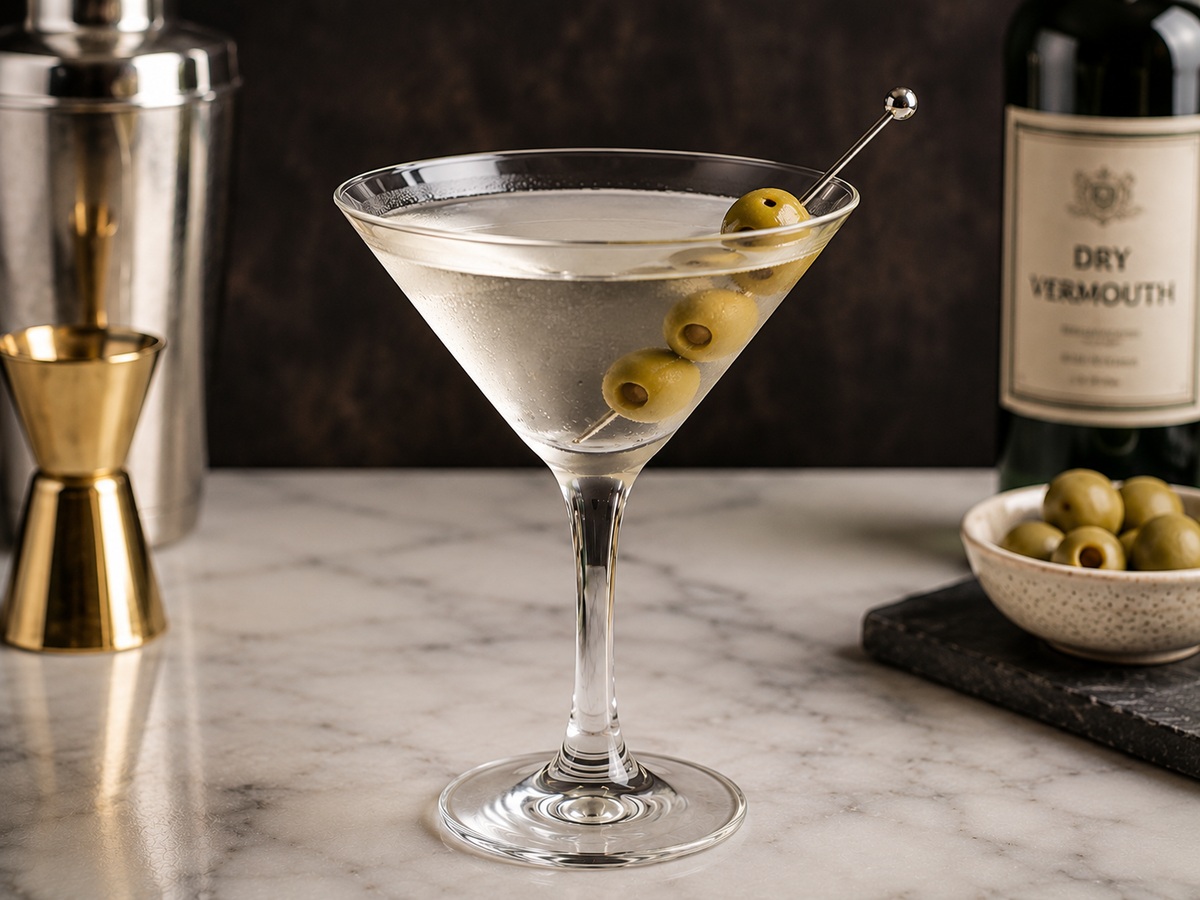
An iconic gin-based cocktail that balances the botanical complexity of gin with the subtle herbal notes of dry vermouth, served ice-cold with a lemon twist or olive.
Drink details
Glass
Martini Glass
Ice
No Ice
Method
Stirred
Strength
Strong
Servings
1
Recipe
Ingredients
Gin
60 ml
Dry Vermouth
10 ml
Garnish
Lemon Peel
Express oils
1 piece
Cocktail Olive
OptionalIf requested
1 piece
Rating
Rate this drink
Method
Preparation
- 1
Stir gin and dry vermouth with ice until thoroughly chilled.
- 2
Strain into a chilled martini glass.
- 3
Express the oils from a lemon peel over the drink and garnish with the peel, or add a cocktail olive if requested.
About the Dry Martini
The Dry Martini is one of the world's most iconic cocktails, celebrated for its simplicity, elegance and distinctly spirit-forward character. Traditionally made with gin and dry vermouth, it highlights the botanical complexity of gin while allowing the subtle herbal, floral and wine-like notes of vermouth to complement the base spirit. With only two main ingredients, every detail—from their proportions to the final garnish—plays an important role in the finished cocktail.
The Martini's exact origins remain uncertain, but it developed during the late 19th century and evolved from earlier gin-and-vermouth cocktails. Early Martini recipes were often sweeter and used different styles of vermouth. As dry gin and French dry vermouth became increasingly popular, the Dry Martini emerged as a more restrained, less sweet variation. By the early 20th century, it had become an established classic in American cocktail culture.
A traditional Dry Martini is stirred with ice until thoroughly chilled and properly diluted, then strained into a chilled Martini glass. Stirring creates a clear, smooth cocktail while allowing a controlled amount of dilution to soften the alcohol and bring the flavours together. The ratio of gin to dry vermouth can vary according to personal preference, with higher proportions of gin producing a drier, more spirit-forward result.
The garnish is another defining feature of the Dry Martini. A lemon twist adds bright citrus oils that complement the botanicals in the gin, while a green olive contributes a more savoury character. Both are classic choices, although they create noticeably different drinking experiences. Variations such as the Dirty Martini, which incorporates olive brine, and the Vodka Martini, which replaces gin with vodka, demonstrate how small changes can significantly alter the cocktail's character.
Renowned for its clean presentation and sophisticated reputation, the Dry Martini remains a symbol of classic cocktail culture. Its popularity has been reinforced by decades of appearances in literature, film and popular culture. Whether enjoyed as a traditional gin Martini with a lemon twist or customised through different ratios and garnishes, it remains a timeless choice for those who appreciate a strong, dry and carefully balanced cocktail.
What does a Dry Martini taste like?
The Dry Martini has a crisp, dry and distinctly spirit-forward flavour, with gin providing the dominant character. Depending on the gin, its botanical profile may include juniper, citrus peel, coriander, floral notes and subtle herbal or spicy undertones. The result is an aromatic cocktail with very little sweetness, allowing the individual ingredients to remain clearly distinguishable.
Dry vermouth adds a delicate layer of complexity, contributing herbal, floral and lightly wine-like flavours that complement the gin. Although used in a relatively small quantity, vermouth helps balance the cocktail's intensity and creates a more rounded flavour. A higher proportion of gin produces a drier, more spirit-forward Martini, while additional vermouth introduces greater herbal complexity and a softer overall character.
The texture should be smooth, clean and silky rather than harsh or watery. Stirring the ingredients with ice provides the necessary chilling and dilution, gently softening the alcohol while preserving the cocktail's clarity and concentrated flavours. Served very cold, a properly prepared Dry Martini feels refreshing despite its relatively high alcohol content.
The garnish noticeably influences the drinking experience. A lemon twist releases bright citrus oils that enhance the gin's botanical aromas and add a fresh, fragrant character. A green olive contributes subtle savoury and briny notes, creating a more savoury impression without changing the cocktail's fundamental dry profile.
The finish is typically long, clean and warming, with lingering juniper, citrus and herbal notes. Unlike sweet or fruit-forward cocktails, the Dry Martini emphasises precision, balance and the natural character of its spirits, making it particularly appealing to those who enjoy strong, dry and aromatic drinks.
Tips for making a Dry Martini
Choose a quality gin
Gin is the dominant ingredient in a Dry Martini, so its quality and botanical profile have a major influence on the final flavour. A classic London Dry Gin is an excellent starting point, offering pronounced juniper notes and a crisp, dry character. Experiment with different gins to discover how citrus, floral, herbal and spicy botanicals affect the cocktail.
Use fresh, properly stored dry vermouth
Dry vermouth is a fortified, aromatised wine and should be treated differently from distilled spirits. Once opened, store it tightly sealed in the refrigerator to preserve its delicate herbal and floral flavours. For the best results, use vermouth while it is still fresh, ideally within one to two months of opening.
Chill the Martini glass thoroughly
A Dry Martini should be served exceptionally cold. Place the Martini glass in the freezer before preparation, or fill it with ice and water while mixing the drink. A properly chilled glass helps maintain the cocktail's temperature and prevents it from warming too quickly after serving.
Use plenty of fresh, solid ice
Fill the mixing glass generously with fresh, solid ice cubes. Larger, well-frozen cubes generally provide more controlled dilution than small, partially melted ice. Avoid using ice that has absorbed freezer odours, as even subtle unwanted flavours can become noticeable in such a minimalist cocktail.
Stir rather than shake
A traditional Dry Martini is stirred with ice rather than shaken. Stirring chills and dilutes the ingredients while maintaining a clear appearance and smooth texture. Stir steadily for approximately 20–30 seconds, adjusting according to the ice, starting temperature and desired dilution. The goal is a properly chilled and balanced cocktail, not simply the coldest possible drink.
Pay attention to the gin-to-vermouth ratio
The classic IBA recipe uses 60 ml gin and 10 ml dry vermouth, creating a 6:1 ratio. This produces a dry, gin-forward cocktail while retaining enough vermouth to contribute herbal complexity. Adjusting the ratio can noticeably change the flavour: more vermouth creates a softer, more aromatic Martini, while less vermouth produces a stronger gin character.
Choose the garnish carefully
A lemon twist and a green olive are both traditional garnishes, but they influence the cocktail differently. Expressing fresh lemon oils over the drink enhances the gin's citrus and botanical aromas, while an olive adds a savoury character. Choose one garnish according to your preference rather than combining both by default.
Serve immediately
Strain the Martini into its chilled glass as soon as it reaches the desired temperature and dilution. Serve immediately, without ice in the glass. Because the cocktail contains no juice, syrup or other strongly flavoured mixers, warming can quickly change its balance and make the alcohol more prominent.
Substitutions & Variations
No London Dry Gin?
You can use another style of gin, such as Plymouth Gin or a contemporary botanical gin. Plymouth Gin generally offers a softer, rounder character, while modern gins may emphasise citrus, floral or herbal notes rather than juniper. The choice of gin significantly influences the final flavour, so select one whose botanical profile you enjoy.
No dry vermouth?
Dry vermouth is an essential component of a traditional Dry Martini, but another dry, aromatised wine can be used as an alternative. A dry white vermouth from a different producer is the closest substitute. If unavailable, a small amount of dry fino sherry can create an interesting variation, although its nutty and savoury character will differ from classic vermouth. Avoid sweet vermouth if you want to maintain the cocktail's dry profile.
Prefer a Wet Martini?
Increase the dry vermouth from 10 ml to 20–30 ml while keeping the gin at 60 ml. A Wet Martini contains a higher proportion of vermouth, producing a softer, more aromatic cocktail with greater herbal and wine-like complexity. This is a good option if you find a traditional Dry Martini too spirit-forward.
Prefer an Extra Dry Martini?
Reduce the dry vermouth from 10 ml to approximately 5 ml while keeping the gin at 60 ml. Some Extra Dry Martini variations use only a small vermouth rinse. The result is a more intensely gin-forward cocktail with less herbal complexity. Use a quality gin, as its botanical character will dominate.
Prefer a Dirty Martini?
Add 5–15 ml olive brine to the traditional gin and dry vermouth mixture, adjusting the quantity to your preferred level of saltiness. Stir with ice and strain into a chilled Martini glass, then garnish with green olives. The brine introduces savoury, salty notes and creates a noticeably different flavour profile from a classic Dry Martini.
Prefer a Vodka Martini?
Replace the 60 ml gin with 60 ml vodka while keeping the 10 ml dry vermouth. Vodka has a more neutral flavour than gin, producing a cleaner, less botanical cocktail. Stir with ice and strain into a chilled Martini glass, then garnish with a lemon twist or olive according to preference.
Prefer a Gibson Martini?
Prepare the Dry Martini using the same gin and dry vermouth proportions, but replace the lemon twist or olive with a pickled cocktail onion. This creates a Gibson Martini, a classic variation distinguished primarily by its savoury onion garnish. The onion contributes a subtle tangy and slightly sweet character.
Prefer a 50/50 Martini?
Use equal parts gin and dry vermouth, such as 35 ml of each. A 50/50 Martini is lighter in alcohol intensity and allows the vermouth's herbal, floral and wine-like flavours to play a much more prominent role. Stir thoroughly with ice and garnish with a lemon twist or olive.
No lemon peel or olives?
You can omit the garnish entirely, although this removes an important aromatic element. Alternatively, express a small piece of orange peel over the cocktail for a softer citrus aroma, or use a grapefruit twist for a brighter, slightly bitter character. These alternatives create variations rather than the traditional IBA presentation.
Prefer a lower-alcohol Martini?
Reduce the gin to 30 ml and increase the dry vermouth to 40 ml. This produces a more vermouth-forward cocktail with a lower overall alcohol content than the standard recipe, while maintaining the Martini's botanical and herbal character. For an even lighter variation, use a smaller serving or explore low-alcohol aperitif cocktails.
Espresso Martini
Try an Espresso Martini for a rich, coffee-forward alternative to the classic Dry Martini. Typically made with vodka, freshly brewed espresso and coffee liqueur, it combines bold roasted coffee flavours with a smooth texture and a subtle sweetness. Unlike the gin-based Dry Martini, the Espresso Martini is shaken with ice to create its characteristic foamy surface. It is an excellent choice for coffee lovers or as an after-dinner cocktail.
Peppermint Espresso Martini
For a festive twist on the Espresso Martini, try a Peppermint Espresso Martini. This variation combines vodka, espresso, coffee liqueur and peppermint flavouring, creating a rich coffee cocktail with a refreshing minty finish. The combination of roasted coffee notes, gentle sweetness and cool peppermint makes it particularly suitable for Christmas celebrations and winter gatherings.
French Martini
A French Martini offers a sweeter, fruitier alternative to the traditional Dry Martini. Usually prepared with vodka, raspberry liqueur and pineapple juice, it delivers vibrant berry flavours, tropical sweetness and a smooth, lightly frothy texture. Despite its name, the French Martini does not contain gin or dry vermouth and is quite different from the classic Dry Martini.
Lemon Drop Martini
Try a Lemon Drop Martini if you enjoy bright citrus flavours and a balance of sweetness and acidity. Typically made with vodka, fresh lemon juice and a sweetening ingredient such as simple syrup or orange liqueur, this cocktail has a refreshing, sweet-tart character. Often served in a sugar-rimmed Martini glass, it is considerably fruitier and sweeter than a traditional Dry Martini.
Peppermint Martini (Candy Cane Martini)
A Peppermint Martini (Candy Cane Martini) is a festive, mint-flavoured cocktail that offers a sweeter and more dessert-like experience than a classic Dry Martini. Recipes vary, but commonly combine vodka with peppermint schnapps or another peppermint-flavoured liqueur. Some versions also include cream or white chocolate liqueur for a richer, creamier texture. Its cool peppermint flavour makes it especially popular during the holiday season.
Pornstar Martini
For a tropical and fruit-forward alternative, try a Pornstar Martini. This modern cocktail typically combines vanilla vodka, passion fruit purée or liqueur, lime juice and a sweetening ingredient, creating a vibrant balance of sweet and tart flavours. It is traditionally accompanied by a small serving of sparkling wine. Despite sharing the Martini name, it is very different from the dry, botanical character of a classic gin Martini.
Frequently Asked Questions
What is the difference between a Dry Martini and a Wet Martini?
The main difference is the proportion of dry vermouth. A Dry Martini uses relatively little vermouth, typically around 60 ml gin to 10 ml dry vermouth in the IBA recipe. A Wet Martini contains more vermouth, often 20–30 ml for 60 ml gin, producing a softer, more aromatic cocktail with greater herbal and wine-like complexity.
What is the difference between a Dry Martini and an Extra Dry Martini?
An Extra Dry Martini contains even less vermouth than a standard Dry Martini. While the IBA Dry Martini uses 60 ml gin and 10 ml dry vermouth, an Extra Dry variation might use approximately 5 ml vermouth or just a vermouth rinse. The result is more intensely gin-forward, with less herbal complexity from the vermouth.
What is the difference between a Dry Martini and a Dirty Martini?
A traditional Dry Martini combines gin and dry vermouth, usually garnished with a lemon twist or olive. A Dirty Martini adds olive brine, introducing salty, savoury flavours and sometimes a slightly cloudy appearance. The amount of brine can be adjusted depending on how dirty you prefer the cocktail.
What is the difference between a Dry Martini and a Vodka Martini?
A traditional Dry Martini is made with gin and dry vermouth, giving it a distinctive botanical character with juniper, citrus and herbal notes. A Vodka Martini replaces the gin with vodka, producing a cleaner, more neutral flavour that allows the vermouth and garnish to stand out differently. Both are typically served very cold in a Martini glass.
Should a Dry Martini be shaken or stirred?
A traditional Dry Martini is stirred with ice rather than shaken. Stirring chills and dilutes the gin and vermouth while preserving a clear appearance and smooth texture. Shaking can introduce tiny air bubbles and ice fragments, temporarily creating a cloudier cocktail. Both methods chill the drink, but stirring is the classic approach.
What is the best gin-to-vermouth ratio for a Dry Martini?
The official IBA Dry Martini uses 60 ml gin and 10 ml dry vermouth, a 6:1 ratio. This creates a dry, gin-forward cocktail with subtle herbal complexity. However, there is no single ideal ratio for every preference. Increasing the vermouth creates a softer, more aromatic Martini, while reducing it produces a drier, more intensely gin-forward drink.
Should a Dry Martini be garnished with an olive or a lemon twist?
Both are traditional garnishes. A lemon twist adds fresh citrus oils that complement the gin's botanical aromas, while a green olive introduces a more savoury character. The IBA preparation specifies lemon peel, with a green olive available if requested. Choose whichever best suits your preferred flavour profile.
Can I make a Dry Martini without vermouth?
You can serve chilled gin with a lemon twist or olive, but without vermouth it is no longer a traditional Dry Martini. Dry vermouth contributes important herbal and wine-like complexity, even in small amounts. If you prefer very little vermouth, try an Extra Dry Martini using approximately 5 ml vermouth or a light vermouth rinse.
Can I prepare Dry Martinis in a large batch or pitcher?
Yes. Multiply the gin and dry vermouth quantities by the number of servings while maintaining the 6:1 ratio. For six cocktails, combine 360 ml gin and 60 ml dry vermouth in a pitcher. If preparing the batch in advance, add approximately 90–120 ml chilled water to account for dilution, then refrigerate until thoroughly cold. Stir gently before serving and pour into chilled Martini glasses. Garnish each serving individually.
Can I prepare a Dry Martini in advance?
Yes. Combine the gin and dry vermouth ahead of time and store the mixture tightly covered in the refrigerator. For a ready-to-pour Martini, add an appropriate amount of water to account for the dilution normally achieved by stirring with ice, then chill thoroughly. Serve in a chilled Martini glass and add the lemon twist or olive immediately before serving. Avoid leaving prepared Martinis at room temperature, as they are best enjoyed very cold.
What is the difference between a Dry Martini and an Espresso Martini?
A Dry Martini is a classic, spirit-forward cocktail made with gin and dry vermouth, usually stirred with ice and served with a lemon twist or olive. It has a dry, crisp character with pronounced botanical flavours. An Espresso Martini, by contrast, is typically made with vodka, freshly brewed espresso and coffee liqueur. It is shaken with ice to create a distinctive foamy surface and has a rich coffee flavour with a smoother, sweeter character. While both are commonly served in Martini glasses, their ingredients, preparation methods and flavour profiles are very different.
What is the difference between a Dry Martini and a French Martini?
A Dry Martini combines gin and dry vermouth to create a dry, botanical and spirit-forward cocktail. A French Martini is typically made with vodka, raspberry liqueur and pineapple juice, giving it a much sweeter, fruitier character with berry and tropical fruit flavours. Unlike a Dry Martini, which is stirred with ice, a French Martini is shaken to produce a smooth texture and a light foam. Despite sharing the Martini name, a French Martini does not contain gin or dry vermouth.
What is the difference between a Dry Martini and a Lemon Drop Martini?
A Dry Martini is made with gin and dry vermouth and has a crisp, dry flavour dominated by botanical and herbal notes. A Lemon Drop Martini is typically prepared with vodka, fresh lemon juice and a sweetening ingredient such as simple syrup or orange liqueur. It has a bright, refreshing citrus flavour with a pronounced sweet-tart balance and is often served in a sugar-rimmed Martini glass. A Dry Martini is stirred and contains no citrus juice, while a Lemon Drop Martini is shaken with ice and is considerably sweeter and fruitier.
What is the difference between a Dry Martini and a Peppermint Espresso Martini?
A Dry Martini is a traditional gin-and-dry-vermouth cocktail with a dry, botanical flavour and a clean, spirit-forward finish. A Peppermint Espresso Martini is a sweeter, coffee-based cocktail typically combining vodka, espresso, coffee liqueur and peppermint flavouring. It is shaken with ice to create a foamy texture and delivers rich roasted coffee notes followed by a refreshing minty finish. Unlike the classic Dry Martini, it has a more dessert-like character and is particularly popular during Christmas and winter celebrations.
What is the difference between a Dry Martini and a Peppermint Martini (Candy Cane Martini)?
A Dry Martini is made with gin and dry vermouth, producing a dry, botanical cocktail that is traditionally stirred with ice. A Peppermint Martini, also known as a Candy Cane Martini, is a festive, sweeter cocktail typically made with vodka and peppermint schnapps or another peppermint-flavoured liqueur. Some versions also include cream or white chocolate liqueur for a richer, creamier texture. Unlike a Dry Martini, which highlights the natural botanical flavours of gin, a Peppermint Martini (Candy Cane Martini) focuses on cool peppermint flavours and often has a dessert-like character.
What is the difference between a Dry Martini and a Pornstar Martini?
A Dry Martini is a classic cocktail made with gin and dry vermouth, offering a dry, crisp and botanical flavour. A Pornstar Martini is a modern, tropical cocktail typically made with vanilla vodka, passion fruit purée or liqueur, lime juice and a sweetening ingredient. It is shaken with ice and has a fruity, aromatic flavour with a balance of sweetness and acidity. A Pornstar Martini is traditionally accompanied by a small serving of sparkling wine, whereas a Dry Martini is served without one. Despite their similar names, the two cocktails have very different ingredients, preparation methods and flavour profiles.