Mojito
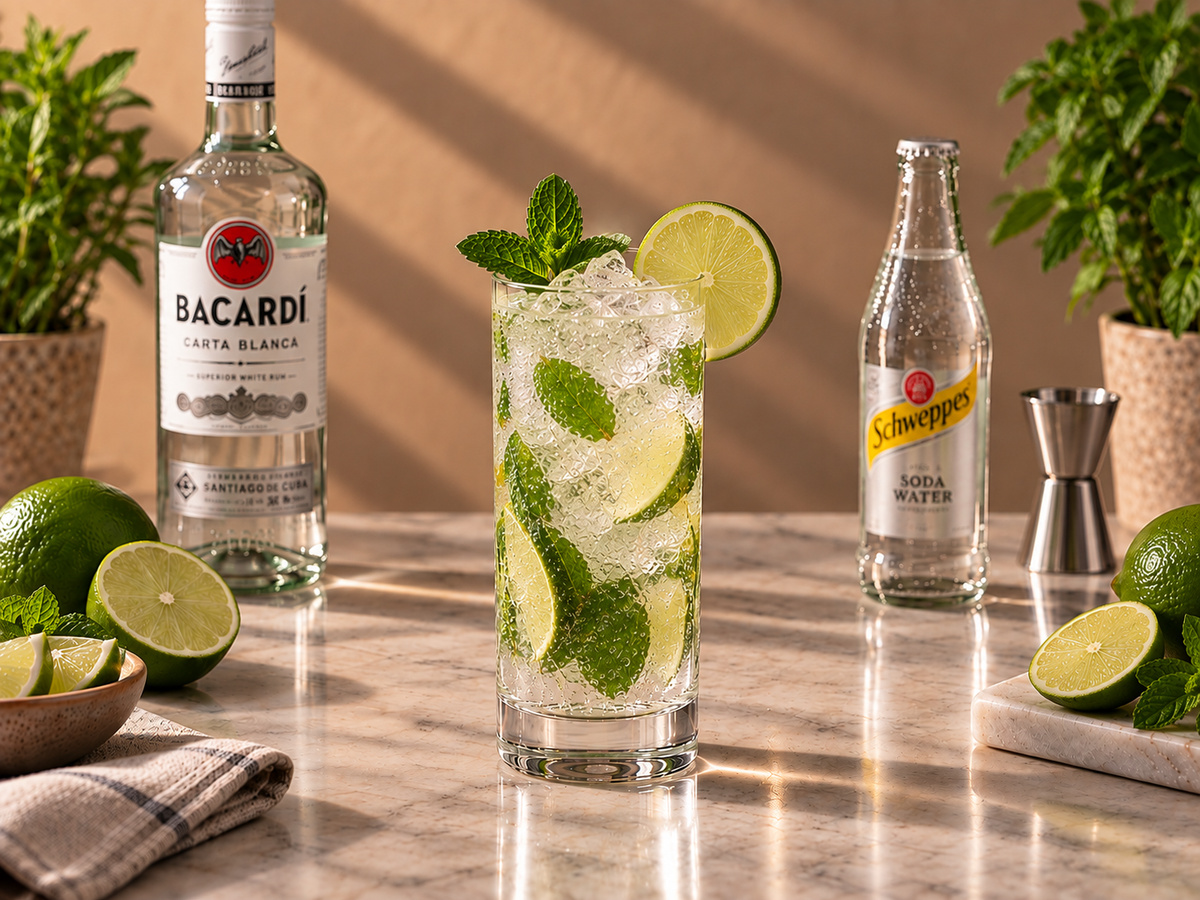
Classic Cuban highball with rum, mint, lime and soda.
Drink details
Glass
Highball Glass
Ice
Cubed
Method
Built
Strength
Medium
Servings
1
Carbonated
Yes
Recipe
Ingredients
White Cuban Rum
45 ml
Lime Juice
Freshly squeezed
20 ml
Sugar
White cane sugar
2 tsp
Mint
6 sprigs
Soda Water
As required
Garnish
Mint
Fresh
1 sprig
Lime Slice
1 piece
Rating
Rate this drink
Method
Preparation
- 1
Mix the mint sprigs with the white cane sugar and fresh lime juice.
- 2
Add a splash of soda water and fill the glass with ice.
- 3
Pour in the White Cuban Rum and top up with soda water.
- 4
Stir lightly to combine all the ingredients.
- 5
Garnish with mint sprigs and a slice of lime.
About the Mojito
The Mojito is a refreshing Cuban highball that combines white rum, fresh lime juice, mint, white cane sugar and soda water. Its appeal comes from the contrast between bright citrus, cooling mint and gentle sweetness, with rum providing the alcoholic backbone. Soda water lengthens the drink and keeps it light and refreshing. Served over plenty of ice, the Mojito is particularly well suited to warm weather and drinkers who prefer fresh, lively cocktails.
What does a Mojito taste like?
A Mojito tastes fresh, citrusy and lightly sweet, with cooling mint running throughout the drink. White rum contributes a subtle sugarcane character without overpowering the lime and herbs. Soda water adds effervescence and keeps the cocktail crisp and refreshing, while the balance of fresh lime juice and white cane sugar gives it a pleasant sweet-and-sour finish.
Tips for making a Mojito
Gently press the mint with the white cane sugar and fresh lime juice rather than crushing or tearing the leaves, which can introduce bitter, vegetal flavors. Add a splash of soda water, then fill the glass with ice. Pour in the white rum, top up with soda water and stir gently to combine the ingredients without losing too much carbonation. Finish with fresh mint and a slice of lime.
Substitutions & Variations
No white rum?
A light gold or lightly aged rum can also work well. Try a mild gold rum such as Havana Club Especial, Bacardí Carta Oro (Gold), or Mount Gay Eclipse. These will give the Mojito a richer and slightly more pronounced rum character while still pairing well with lime and mint. Avoid heavily aged, dark, or spiced rums if you want to keep the drink close to the classic Mojito style.
No white cane sugar?
Simple syrup is a convenient substitute. Replace the 2 teaspoons of white cane sugar with approximately 15 ml simple syrup. Because the sugar is already dissolved, simple syrup mixes easily into the drink and provides consistent sweetness. Add it with the lime juice before the remaining ingredients. The result will be very similar, although white cane sugar gives the drink a slightly more traditional texture and preparation style. Agave syrup can also be used, but start with slightly less because its sweetness and flavor differ from simple syrup.
No soda water?
Club soda, seltzer, or plain sparkling mineral water can all be used. Club soda is the closest substitute and may add a very slight mineral character, while seltzer is generally more neutral. Sparkling mineral water also works well, although strongly mineralized varieties can subtly change the Mojito's flavor. Avoid tonic water, lemon-lime soda, and other sweetened carbonated drinks unless you intentionally want to change the cocktail's flavor and sweetness.
Frequently Asked Questions
Can I make a Mojito without a muddler?
Yes. A muddler is convenient but not essential. Use the back of a wooden spoon or another blunt utensil to gently press and mix the mint with the white cane sugar and fresh lime juice. The goal is to release the mint's aroma without crushing, shredding or grinding the leaves, which can introduce bitter, vegetal flavors. As you gently press the mint, stir the sugar into the lime juice to help it dissolve. You can also use your hands. Gently clap the mint sprigs between your palms before adding them to the glass, or lightly press the leaves with your fingers to release their aroma. Then stir them with the white cane sugar and lime juice in the glass. This may produce a slightly less intense mint flavor than gently pressing the mint with a muddler or spoon, but it works well when no muddler is available.
Should you shake a Mojito?
A Mojito is traditionally built directly in the serving glass rather than shaken. The mint is mixed with white cane sugar and fresh lime juice, a splash of soda water is added, the glass is filled with ice, and the rum and remaining soda water are added before the drink is stirred lightly. You can make a shaken variation, but it will produce a somewhat different drink. Shaking creates more dilution and aeration and can make the Mojito colder and more integrated, while the traditional built version retains a lighter, more direct character. If you choose to shake it, simple syrup is more practical than granulated white cane sugar because it is already dissolved and will incorporate more easily during a short shake. Gently press the fresh mint in the serving glass, then shake the rum, lime juice and approximately 15 ml simple syrup separately with ice. Strain the mixture into the glass over the mint, add fresh ice as needed, then top with soda water and stir gently. Avoid shaking the mint, as the leaves can break apart and release bitter or vegetal flavors. Never shake the soda water. Always add it afterward so the drink retains its carbonation.
Why does my Mojito taste bitter?
Overworking the mint is a common cause of bitterness. Mint should be handled gently to release its aromatic oils rather than crushed, shredded or ground, which can introduce bitter, vegetal flavors. Lime can also contribute bitterness, particularly when pieces of peel or white pith are crushed into the drink. Using fresh lime juice helps avoid this problem. If you use lime pieces in a variation, avoid aggressively muddling the peel. Too little sweetness can also make existing bitterness and acidity seem more pronounced. If the Mojito tastes overly sharp or bitter, a small amount of additional white cane sugar can help restore the balance between lime, sweetness and rum. A small amount of simple syrup can also be used for an easier-to-dissolve adjustment.
Can I make a Mojito in advance?
A Mojito is best assembled shortly before serving, but you can prepare several components in advance. Fresh lime juice can be squeezed and refrigerated, the white cane sugar can be measured, and the rum can also be measured ahead of time. Keep these components separate and chilled until you are ready to make the drink. Wait until serving to combine the fresh mint with the sugar and lime juice, add the ice, and top the drink with soda water. Mint can wilt and develop less pleasant flavors if it sits in the mixed drink for too long, ice will gradually dilute the cocktail, and soda water will lose its carbonation. If you are making Mojitos for a group, simple syrup can be used instead of granulated white cane sugar to make advance preparation easier. Pre-mix the rum, lime juice and simple syrup and keep the mixture refrigerated. When serving, add fresh mint and ice to each glass, pour in the pre-mixed base, top with soda water and stir gently.
What type of rum is best for a Mojito?
A light-bodied white rum is the classic choice for a Mojito. Its clean, relatively subtle flavor allows the fresh lime, mint and sweetness to remain prominent while still providing the drink's rum character. Cuban-style white rums are particularly well suited to the cocktail. Bacardí Carta Blanca, Havana Club 3 Años and Flor de Caña 4 Extra Seco are good examples. Other light white rums can also work well, so you do not need a specific brand to make a good Mojito. For a richer Mojito, you can use a lightly aged or gold rum instead. This adds more vanilla, caramel, oak or sugarcane character and makes the rum more noticeable in the finished drink. Heavily aged, dark or strongly spiced rums can overpower the lime and mint, so they are less suitable if you want the classic Mojito flavor.
Can I make a Mojito without fresh mint?
Fresh mint is one of the defining ingredients of a Mojito, so there is no substitute that will produce exactly the same fresh, aromatic character. If you want a classic Mojito, fresh mint is strongly recommended. If fresh mint is unavailable, other fresh herbs such as basil can be used to make a Mojito-style variation. Basil gives the drink a different, more herbal character but works well with lime and rum. Other varieties of fresh mint, such as spearmint or peppermint, can also be used, although their flavor and intensity will differ. Spearmint is generally the closest choice to the mint traditionally used in Mojitos. Dried mint is not recommended. It has a very different flavor and texture and does not provide the bright aroma of fresh leaves. Mint extract or peppermint extract should also be used with caution, as they are highly concentrated and can easily overpower the drink.