Champagne Cocktail
A classic blend of Champagne, Cognac, bitters and sugar.
Drink details
Glass
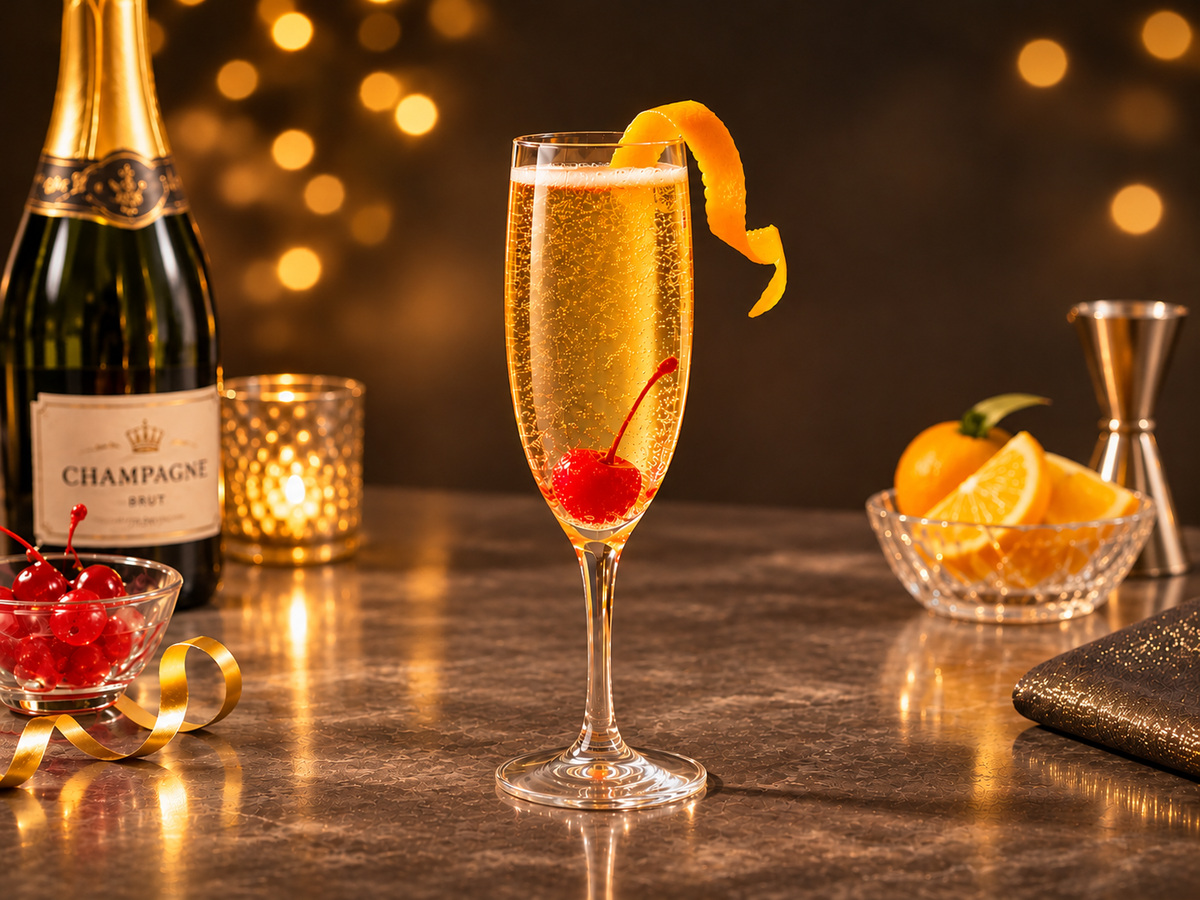
Champagne Flute
Ice
No Ice
Method
Built
Strength
Medium
Servings
1
Carbonated
Yes
Recipe
Ingredients
Sugar Cube
1 cube
Angostura Bitters
2 dashes
Cognac
10 ml
Champagne
Chilled
90 ml
Grand Marnier
OptionalA few drops (optional).
Rating
Rate this drink
Method
Preparation
- 1
Place the sugar cube in a large Champagne glass and add 2 dashes of Angostura bitters.
- 2
Add 10 ml Cognac and gently pour in 90 ml chilled Champagne. Add a few drops of Grand Marnier if desired.
- 3
Garnish with orange zest and a maraschino cherry.
About the Champagne Cocktail
The Champagne Cocktail is a historic classic that combines the elegance of Champagne with the warmth of Cognac, the aromatic complexity of Angostura bitters and the sweetness of a sugar cube. The drink dates back to the nineteenth century and remains a popular choice for celebrations and special occasions. Its simple preparation allows the character of the Champagne to remain at the forefront, while the bitters and Cognac provide additional depth.
What does a Champagne Cocktail taste like?
Light, sparkling and gently sweet, with crisp Champagne acidity, warm Cognac notes and aromatic spice from Angostura bitters. The sugar cube adds subtle sweetness, while orange zest contributes a fresh citrus aroma. The finish is refreshing, elegant and slightly bittersweet.
Tips for making a Champagne Cocktail
Chill the Champagne and glass
Use well-chilled Champagne and a chilled Champagne flute to keep the cocktail refreshing without ice. Keeping everything cold helps preserve the sparkling wine's bubbles and ensures the drink is served at its best.
Choose a dry Brut Champagne
A dry Brut Champagne provides crisp acidity that balances the sweetness of the sugar cube and optional Grand Marnier. Avoid sweeter Champagne styles unless you also reduce the added sweetness.
Soak the sugar cube with bitters
Add the Angostura bitters directly to the sugar cube before adding the Cognac. This allows the sugar to absorb the aromatic bitters and gradually release their flavour as the cube dissolves.
Add Cognac and Grand Marnier carefully
Cognac adds warmth and depth to the Champagne Cocktail. Grand Marnier is optional and should be added sparingly, as it introduces additional orange flavour and sweetness. For a lighter, more Champagne-forward cocktail, omit the Grand Marnier.
Pour Champagne slowly
Slowly pour the chilled Champagne into the flute to prevent excessive foaming and preserve its bubbles. Avoid vigorous stirring, which can cause the cocktail to lose carbonation.
Serve immediately
Serve the Champagne Cocktail immediately after preparation while it is cold and sparkling. The sugar cube will gradually dissolve, subtly changing the sweetness as the cocktail is enjoyed.
Substitutions & Variations
No Champagne?
For a more affordable variation, replace Champagne with a dry sparkling wine such as Crémant, Cava or Prosecco. These alternatives provide similar bubbles and freshness, although their flavour and character may differ from Champagne.
No Cognac?
Cognac adds warmth and depth to the Champagne Cocktail. If Cognac is unavailable, another grape-based brandy can be used instead, such as French Armagnac, Spanish Brandy de Jerez, or a good-quality VSOP brandy. Armagnac typically offers a richer, more rustic character, while Brandy de Jerez can introduce warmer, sweeter notes. The flavour may differ depending on the brandy selected.
No Grand Marnier?
Grand Marnier is an optional ingredient that adds a rich orange aroma, gentle sweetness, and additional depth to the Champagne Cocktail. Its combination of orange liqueur and Cognac complements the Champagne's crisp acidity, creating a rounder, slightly sweeter cocktail with warm citrus notes. Without Grand Marnier, the cocktail has a drier, lighter, and more Champagne-forward character. The Champagne's freshness and bubbles become more prominent, while the Cognac and Angostura bitters provide warmth and aromatic complexity without the additional orange sweetness. Both versions are enjoyable. Add a small amount of Grand Marnier if you prefer a richer, fruitier cocktail, or leave it out for a crisper, more traditional Champagne Cocktail.
Prefer a lighter variation?
For a lighter version, omit the Cognac and combine Champagne with a sugar cube and Angostura bitters. This creates a simpler sparkling cocktail with less alcohol and a more pronounced Champagne character.
Frequently Asked Questions
Why is my Champagne Cocktail too sweet?
The sweetness may come from the sugar cube, the Champagne or the optional Grand Marnier. Use a dry Brut Champagne and avoid adding too much Grand Marnier. If you prefer a less sweet cocktail, use half a sugar cube or reduce the amount of sugar, and omit the Grand Marnier. If your cocktail is already too sweet, add a little extra well-chilled Brut Champagne to balance the sweetness. Keep in mind that the sugar cube gradually dissolves, so the cocktail may become sweeter as you drink it.
Why does my Champagne Cocktail lose its bubbles?
Champagne loses carbonation when it becomes warm or is poured too aggressively. Chill both the Champagne and the glass before preparing the cocktail. Pour slowly and avoid stirring, as excessive movement releases the bubbles more quickly. Serve immediately after preparation.
Why is the sugar cube not dissolving?
A sugar cube dissolves slowly in cold Champagne, which is normal for this cocktail. The Angostura bitters help moisten the cube, but some sugar may remain at the bottom of the glass. This creates a gradual change in sweetness as you drink. Avoid crushing or stirring the cube excessively if you want to preserve the traditional presentation.
Why does my Champagne Cocktail taste too bitter?
Angostura bitters are highly concentrated, and adding too much can overpower the Champagne. Use the recommended two dashes and apply them directly to the sugar cube. A very dry Champagne may also make the bitterness more noticeable. For your next serving, measure the bitters carefully rather than pouring freely.
Why is my Champagne Cocktail foaming excessively?
Champagne can foam rapidly when poured directly over the sugar cube, especially if the wine or glass is not properly chilled. Pour the Champagne slowly, preferably with the glass slightly tilted, and pause if the foam rises too quickly. Avoid shaking or stirring the drink.
Can I prepare a Champagne Cocktail in advance?
It is best to prepare the Champagne Cocktail immediately before serving. If made too early, the Champagne will gradually lose its carbonation and the sugar cube will continue dissolving. You can chill the glasses and Champagne in advance and prepare the other ingredients, then assemble the cocktail just before serving.
Can I make Champagne Cocktails in a large batch or pitcher?
You can prepare Champagne Cocktails for a group, but it is best not to mix everything in a pitcher in advance. Champagne loses its bubbles when poured and stored in a large container. Instead, prepare the Cognac and optional Grand Marnier in advance, then place a sugar cube with Angostura bitters in each chilled glass. Add the spirits and slowly top with chilled Champagne just before serving. This keeps each cocktail fresh and sparkling.