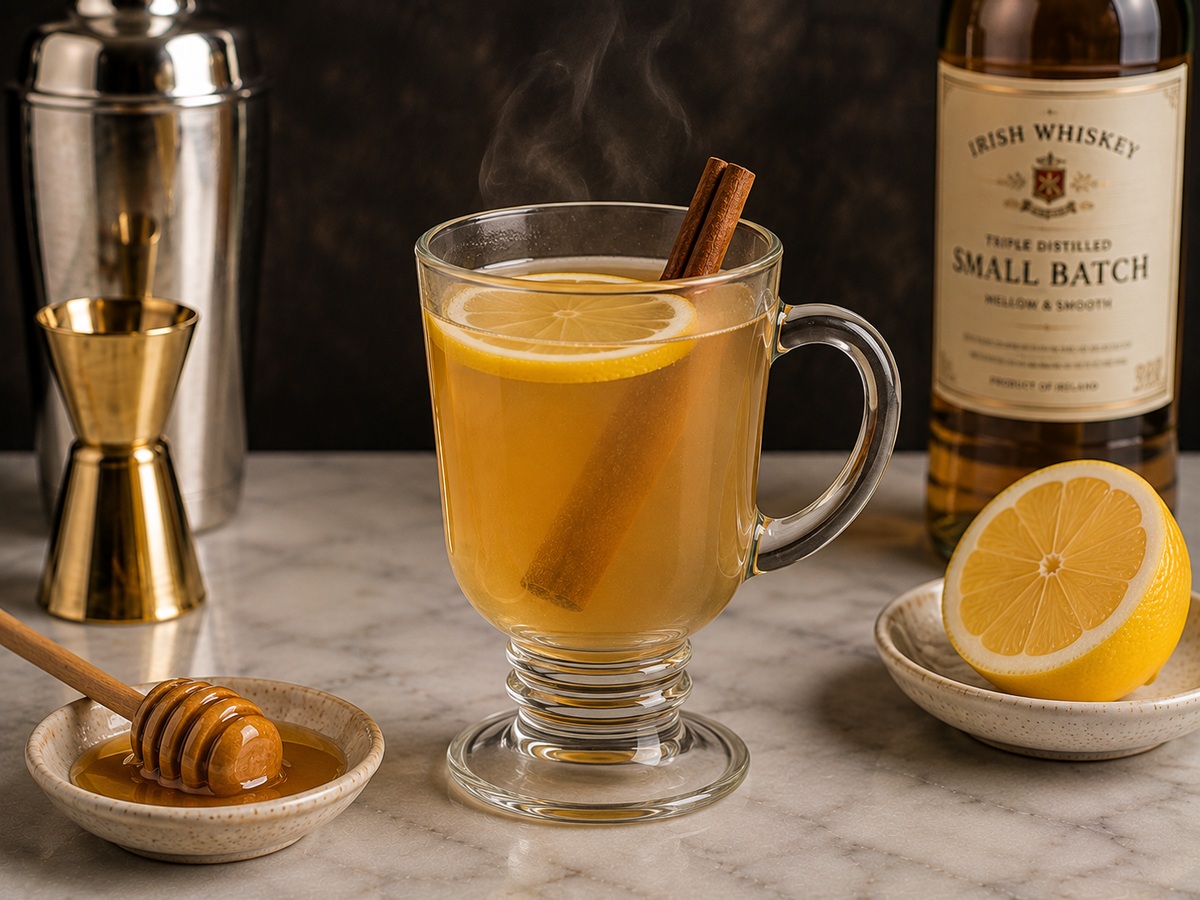
Mulled Wine (Glühwein)
A comforting European winter cocktail made by gently warming red wine with fresh orange slices, aromatic spices and sugar.

Drink details
Glass
Irish Coffee Glass
Ice
No Ice
Method
Built
Strength
Medium
Servings
4
Recipe
Ingredients
Red Wine
Dry, fruity red wine
750 ml
Orange Slice
Fresh orange slices
4 pieces
Cinnamon Stick
Whole
2 pieces
Star Anise
Whole
2 pieces
Cloves
Whole
6 pieces
Sugar
40 g
Rating
Rate this drink
Method
Preparation
- 1
Pour 750 ml of dry red wine into a saucepan. Add the orange slices, cinnamon sticks, star anise, cloves and sugar.
- 2
Heat gently over low heat, stirring occasionally until the sugar has completely dissolved. Do not allow the wine to boil.
- 3
Keep the wine warm over very low heat for approximately 20 minutes, allowing the orange and spices to infuse.
- 4
Taste the Mulled Wine and adjust the sweetness if necessary. Stir until any additional sugar has dissolved.
- 5
Remove the saucepan from the heat and strain out the orange slices and whole spices.
- 6
Pour the Mulled Wine into four heatproof glasses or mugs and serve immediately while warm.
About the Mulled Wine (Glühwein)
Mulled Wine is a traditional warm alcoholic drink made by gently heating red wine with citrus, sugar and aromatic spices. Particularly popular during the Christmas season, it is enjoyed throughout Europe under different names, including Glühwein in Germany and Austria, vin chaud in France and glögg in Scandinavia.
The tradition of drinking heated, spiced wine dates back to ancient times, with early examples associated with the Roman Empire. Over the centuries, variations developed across Europe, often incorporating locally available spices, fruits and sweeteners. Today, Mulled Wine is especially associated with Christmas markets, winter celebrations and festive gatherings.
Traditional Mulled Wine typically combines red wine with warming spices such as cinnamon, cloves and star anise, alongside citrus fruit and a little sugar. The ingredients are heated gently without boiling, allowing the flavours to infuse while preserving the wine's character.
The Drinks On Hand version uses dry red wine, orange slices, cinnamon sticks, star anise, cloves and sugar. It is prepared without additional spirits, creating a balanced, aromatic and comforting winter drink. Brandy can be added as an optional variation for those who prefer a stronger version.
What does a Mulled Wine (Glühwein) taste like?
Mulled Wine has a warm, aromatic and comforting flavour, combining the fruity character of red wine with fragrant winter spices and a gentle sweetness. The wine provides a rich, smooth base with notes of dark berries and subtle acidity, while the orange slices contribute a bright citrus aroma that balances the deeper flavours.
Cinnamon adds a soft, warming sweetness, cloves bring a distinctive spicy depth, and star anise introduces delicate liquorice-like notes. The sugar rounds out the wine's natural acidity and tannins without overpowering its fruitiness.
Served warm, Mulled Wine is smooth, fragrant and gently spiced, with a lingering finish of citrus, cinnamon and warming spices. The overall flavour is rich and festive, yet balanced and easy to drink.
Tips for making a Mulled Wine (Glühwein)
Choose a fruity, dry red wine
Use a medium-bodied, fruity red wine such as Merlot, Grenache or Tempranillo. These wines provide enough fruitiness and body to complement the spices without becoming overpowering. Avoid heavily oaked, very tannic or particularly expensive wines, as their more delicate characteristics may be lost during heating.
Never boil the wine
Heat the Mulled Wine gently over low heat, ideally keeping it around 65–75°C (149–167°F). Avoid boiling, which can cause excessive alcohol evaporation and negatively affect the wine's flavour. A kitchen thermometer can help maintain a consistent temperature.
Allow the spices to infuse
Let the wine infuse gently for approximately 20 minutes. This gives the cinnamon, cloves, star anise and orange enough time to release their flavours. Avoid prolonged heating, as the spices may become overpowering or introduce unwanted bitterness.
Adjust the sweetness gradually
Start with the recommended 40 g of sugar for 750 ml of red wine. Different wines have varying levels of acidity and natural fruitiness, so taste the Mulled Wine before adding more sugar. Add small amounts at a time and stir until completely dissolved.
Use whole spices
Whole cinnamon sticks, cloves and star anise are preferable to ground spices because they infuse gradually and can be removed easily. Ground spices may make the wine cloudy, create sediment and produce an overly intense flavour.
Prepare in advance
Mulled Wine can be prepared ahead of time. After heating and infusing, remove the spices and orange slices, cool the wine promptly and refrigerate it in a covered container at 4°C (40°F) or below. Reheat gently before serving without bringing it to a boil.
Serve warm in heatproof glasses
Serve Mulled Wine in heatproof mugs or Irish Coffee glasses. Warm the glasses with hot water beforehand if desired, then empty them before pouring in the wine. For an attractive presentation, garnish each serving with a fresh orange slice or cinnamon stick.
Substitutions & Variations
No dry red wine?
Use a fruity, medium-bodied red wine such as Merlot, Grenache or Tempranillo. A slightly sweeter red wine can also work, but reduce the added sugar to avoid an overly sweet result. Avoid heavily oaked or very tannic wines, which may become harsh when heated with spices.
No cinnamon sticks?
Use approximately 1/2 teaspoon of ground cinnamon instead of the two cinnamon sticks. Add it sparingly, as ground cinnamon releases its flavour quickly and may make the wine slightly cloudy. Whole cinnamon sticks are preferable when available.
No star anise?
Simply omit the star anise. The Mulled Wine will still have plenty of warming flavour from the cinnamon and cloves. Alternatively, add a small strip of orange peel for extra citrus aroma. Avoid adding too much anise-flavoured spice, as it can easily overpower the wine.
No cloves?
Omit the cloves or replace them with a small pinch of ground allspice. Allspice provides a similarly warm, aromatic character, although the flavour will not be identical.
Prefer a stronger Mulled Wine?
Add 60 ml of brandy or Cognac to the finished batch of four servings, approximately 15 ml per serving. Stir it in after removing the saucepan from the heat to preserve its aroma. Brandy adds warming fruit and oak notes, while Cognac provides a smoother, more refined character. This is an optional variation and is not part of the standard recipe.
Prefer a less sweet Mulled Wine?
Reduce the sugar from 40 g to 20 g, or omit it initially and sweeten gradually to taste. A naturally fruity red wine may require less added sugar.
Prefer a sweeter Mulled Wine?
Increase the sugar gradually, starting with an additional 10 g. Stir until fully dissolved and taste before adding more. Honey or maple syrup can also be used, although they will introduce their own distinctive flavours.
Prefer a non-alcoholic version?
Replace the 750 ml of red wine with 750 ml of alcohol-free red wine. Use the same orange slices and spices, but start with less sugar because some alcohol-free wines are naturally sweeter. Heat gently without boiling and adjust the sweetness to taste. Check the product label if a completely alcohol-free drink is required.
Frequently Asked Questions
What is Mulled Wine made of?
Traditional Mulled Wine is made by gently heating red wine with citrus fruit, sugar and aromatic spices. The Drinks On Hand recipe uses 750 ml of dry red wine, four orange slices, two cinnamon sticks, two star anise, six cloves and 40 g of sugar. This produces four servings. Brandy is not included in the standard recipe.
What is the best red wine for Mulled Wine?
A fruity, medium-bodied dry red wine such as Merlot, Grenache or Tempranillo is an excellent choice. These wines provide enough fruitiness and body to complement the spices. Avoid heavily oaked or very tannic wines, which can taste harsh when heated. An expensive wine is unnecessary because the spices and citrus will significantly influence its flavour.
Should Mulled Wine be boiled?
No. Mulled Wine should be heated gently without boiling. Aim for approximately 65–75°C (149–167°F), using a kitchen thermometer if available. Boiling can cause excessive alcohol evaporation and negatively affect the wine's flavour. Keep the wine warm over very low heat for approximately 20 minutes to allow the spices and orange to infuse.
Does Mulled Wine still contain alcohol?
Yes. Mulled Wine remains alcoholic after gentle heating. Although some alcohol may evaporate during preparation, the amount depends on the heating temperature, duration and cooking conditions. Gently warming the wine for 20 minutes does not reliably remove its alcohol. For a non-alcoholic alternative, use alcohol-free red wine.
Can I prepare Mulled Wine in advance?
Yes. Prepare the Mulled Wine according to the recipe, then remove the orange slices and whole spices to prevent excessive infusion. Cool it promptly and refrigerate it in a covered container at 4°C (40°F) or below. Reheat gently over low heat before serving, without allowing it to boil. Add fresh orange slices or a cinnamon stick as garnish if desired.
How long does homemade Mulled Wine last in the refrigerator?
For the best flavour and quality, refrigerate homemade Mulled Wine promptly in a covered container at 4°C (40°F) or below and consume it within 2–3 days. Remove the spices and orange slices before storing to prevent bitterness. Reheat only the amount needed and avoid repeatedly cooling and reheating the same batch. Discard it if it has been improperly stored.
Can I make Mulled Wine without alcohol?
Yes. Replace the 750 ml of regular red wine with 750 ml of alcohol-free red wine and use the same orange slices and whole spices. Start with less sugar because some alcohol-free wines are naturally sweeter. Heat gently without boiling and adjust the sweetness to taste. Check the wine's label if you require a completely alcohol-free drink.
Can I make Mulled Wine in a large batch or pitcher?
Yes. Mulled Wine is particularly suitable for large gatherings. For eight servings, use 1.5 litres of dry red wine, eight orange slices, four cinnamon sticks, four star anise, twelve cloves and 80 g of sugar. Heat gently in a large saucepan or suitable slow cooker without boiling, and allow approximately 20 minutes for the spices to infuse. Taste and adjust the sweetness, then remove the spices and orange slices. Keep warm at a suitable serving temperature and serve in heatproof glasses or mugs. If desired, add 120 ml of brandy after heating as an optional variation.