Death in the Afternoon
A bold, herbal sparkling cocktail combining absinthe with chilled Champagne, known for its distinctive anise flavour.
Drink details
Glass
Champagne Flute
Ice
No Ice
Method
Built
Strength
Strong
Servings
1
Carbonated
Yes
Recipe
Ingredients
Absinthe
45 ml
Champagne
Chilled
120 ml
Rating
Rate this drink
Method
Preparation
- 1
Pour the absinthe into a chilled Champagne flute.
- 2
Slowly top up with chilled Champagne.
- 3
Serve immediately without stirring.
About the Death in the Afternoon
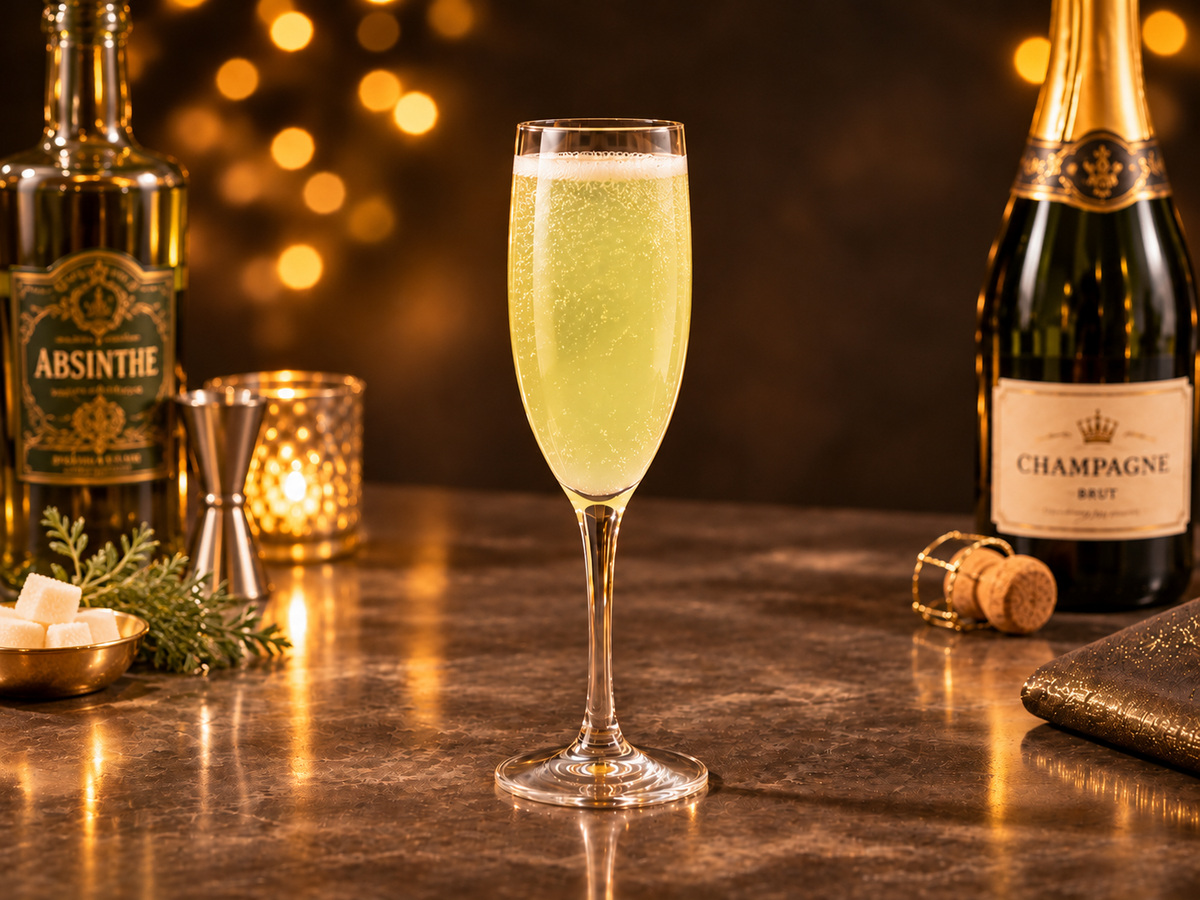
Death in the Afternoon is a classic sparkling drink made with absinthe and chilled Champagne. The drink is closely associated with American writer Ernest Hemingway, who contributed the recipe to the 1935 cocktail collection So Red the Nose, or Breath in the Afternoon. Named after Hemingway's 1932 book Death in the Afternoon, the cocktail combines the distinctive herbal intensity of absinthe with the crisp acidity and lively bubbles of Champagne. Its pale, cloudy appearance develops when Champagne is added to the absinthe, creating an unusual and visually striking drink. Despite its simple two-ingredient recipe, Death in the Afternoon is a powerful cocktail with a complex flavour.
What does a Death in the Afternoon taste like?
Death in the Afternoon has a bold, herbal and aromatic flavour dominated by the distinctive anise and liquorice notes of absinthe. The Champagne adds crisp acidity, delicate fruitiness and lively bubbles, helping to balance the absinthe's intensity. The result is a dry, refreshing yet powerful cocktail with a lingering herbal finish.
Tips for making a Death in the Afternoon
Chill the Champagne and glass
Chill both the Champagne and Champagne flute thoroughly before preparing the cocktail. This keeps the drink refreshingly cold without needing ice, which would dilute its flavours.
Choose a quality absinthe
Use a good-quality absinthe with a balanced herbal profile. The distinctive anise, fennel and other botanical notes strongly influence the finished cocktail, so choose an absinthe whose flavour you enjoy.
Use dry Brut Champagne
Choose a dry Brut Champagne to complement the absinthe without adding excessive sweetness. Its crisp acidity and lively bubbles help balance the intense herbal character of the spirit.
Pour Champagne slowly
Slowly pour the chilled Champagne over the absinthe to control excessive foaming and preserve carbonation. A gentle pour helps retain the cocktail's lively bubbles.
Expect a cloudy appearance
The mixture may become cloudy as the absinthe is diluted by the Champagne. This natural effect, known as the louche, occurs when certain essential oils in the absinthe become less soluble. It is normal and does not indicate a problem with the cocktail.
Serve without ice or stirring
Serve the cocktail immediately in a chilled Champagne flute, without adding ice or stirring. This helps preserve the intended balance of flavours and the Champagne's delicate bubbles.
Be mindful of the alcohol strength
Death in the Afternoon can be relatively strong because absinthe has a high alcohol content. Despite its refreshing appearance and sparkling character, it should be enjoyed in moderation.
Substitutions & Variations
No Champagne?
Replace Champagne with a dry sparkling wine such as Crémant or Cava. Prosecco can also be used, although it generally creates a softer, fruitier and potentially sweeter cocktail.
No Absinthe?
Pastis or another anise-flavoured spirit can provide a similar liquorice character, but the result will differ from the traditional recipe. These alternatives may also be sweeter, so adjust the quantity to taste.
Prefer a lighter variation?
Reduce the absinthe from 45 ml to 15–25 ml while keeping the Champagne at 120 ml. This produces a lighter, more Champagne-forward cocktail with a gentler herbal flavour.
Prefer a stronger absinthe character?
Increase the proportion of absinthe slightly, keeping in mind that its high alcohol content and intense flavour can quickly overpower the Champagne.
Frequently Asked Questions
Why does Death in the Afternoon turn cloudy?
Absinthe contains aromatic essential oils, particularly from anise, that dissolve in alcohol but become less soluble when diluted. Adding Champagne can cause these oils to form tiny droplets, producing the characteristic cloudy appearance known as the louche effect.
What is the best Champagne for Death in the Afternoon?
A dry Brut Champagne is recommended because its crisp acidity and restrained sweetness complement the intense herbal flavour of absinthe. Suitable examples include Moët & Chandon Brut Impérial, Veuve Clicquot Yellow Label Brut and Laurent-Perrier La Cuvée Brut. An expensive vintage Champagne is unnecessary, as absinthe strongly influences the finished taste.
Can I make Death in the Afternoon with Prosecco instead of Champagne?
Yes. Prosecco can replace Champagne, although it generally creates a softer, fruitier and potentially sweeter cocktail. Dry Cava or Crémant are also suitable alternatives.
Should Death in the Afternoon be served with ice?
No. Death in the Afternoon is generally served without ice in a chilled Champagne flute. Chill the Champagne and glass beforehand to keep the drink cold without diluting it.
Can I prepare Death in the Afternoon in advance?
You can measure the absinthe in advance and keep it chilled until ready to serve, but add the Champagne immediately before serving. Mixing the cocktail too early causes the Champagne to lose its carbonation, resulting in a flatter drink. Keep the Champagne refrigerated and the glasses chilled for the best results.
Can I make Death in the Afternoon in a large batch or pitcher?
Yes, although it is best prepared immediately before serving to preserve the Champagne's carbonation. For eight servings using our recipe, combine 360 ml of absinthe with 960 ml of chilled Champagne. Pour the absinthe into a chilled pitcher, slowly add the Champagne and stir only if necessary and very gently. Serve immediately in chilled Champagne flutes. Because this is a relatively strong cocktail, smaller servings or a reduced proportion of absinthe may be preferable.